TDP-43 (C-terminal) Polyclonal antibody proteintech 12892-1-AP
$449.00
In stock
SKU
12892-1-AP
TARDBP, TDP 43, TDP43, TDP-43, ALS10
| Host / Isotype: Rabbit / IgG | Class: Polyclonal |
| Reactivity: Human, Mouse, Rat And More (4) | Immunogen: Recombinant protein Predict reactive species |
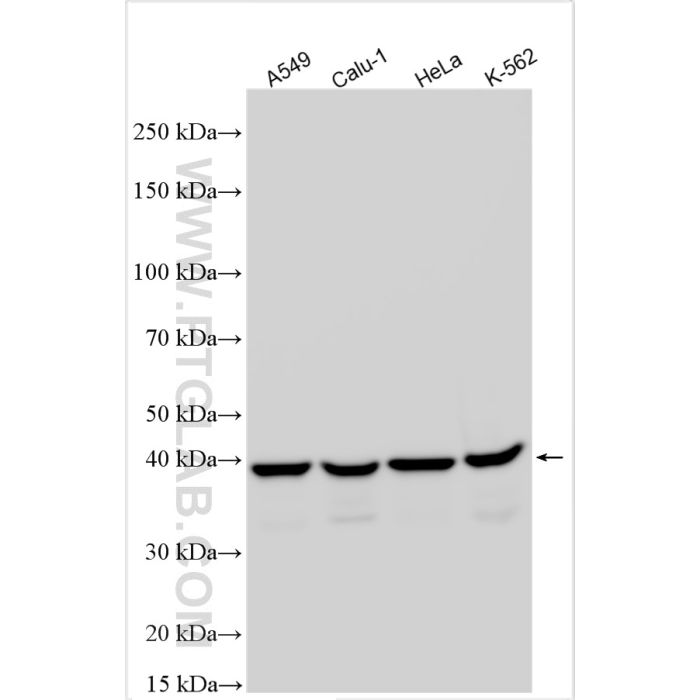
| Applications: WB, IHC, IF/ICC, IF-Fro, FC (Intra), IP, CoIP, ChIP, RIP, ELISA | Observed Molecular Weight: 43 kDa |
| Formulation: PBS, Azide, Glycerol | GenBank Accession Number: BC001487 |
| Conjugate: Unconjugated | Gene Symbol: TDP-43 |
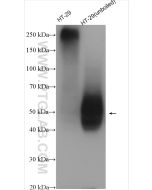
| Tested Applications: Positive WB detected in | Gene ID (NCBI): 23435 |
| Application: Western Blot (WB) | RRID: AB_2200505 |
| Dilution: WB : 1:5000-1:50000 | Conjugate: Unconjugated |
| Tested Reactivity: Human, Mouse, Rat | Form: Liquid |
| Host / Isotype: Rabbit / IgG | Background Information: Transactivation response (TAR), DNA-binding protein of 43 kDa (also known as TARDBP or TDP-43), was first isolated as a transcriptional inactivator binding to the TAR DNA element of the HIV-1 virus. Neumann et al. (2006) found that a hyperphosphorylated, ubiquitinated, and cleaved form of TARDBP, known as pathologic TDP-43, is the major component of the tau-negative and ubiquitin-positive inclusions that characterize amyotrophic lateral sclerosis (ALS) and the most common pathological subtype of frontotemporal lobar degeneration (FTLD-U). 12892-1-AP is a rabbit polyclonal antibody raised against the C-terminal amino acids of human TDP-43. This antibody recognizes the cleavage product of 20-30 kDa in addition to the native and phosphorylated forms of TDP-43. Immunohistochemical analyses of TDP-43 using this antibody detect both normal diffuse nuclear staining and insoluble inclusions in pathologic tissues. Various forms of TDP-43 exist, including 18-35 kDa of cleaved C-terminal fragments, 45-50 kDa phosphoprotein, 55 kDa glycosylated form, 75 kDa hyperphosphorylated form, and 90-300 kDa cross-linked form. (17023659,19823856,21666678,22193176) Recently TDP-43 has been reported to be overexpressed in triple negative breast cancer (TNBC) and it may be a potential target for TNBC diagnosis and drug design. (29581274) |