GLI1 Monoclonal antibody proteintech 66905-1-Ig
$449.00
In stock
SKU
66905-1-Ig
1D2B2, GLI, GLI family zinc finger 1, Glioma associated oncogene, Glioma-associated oncogene
| Host / Isotype: Mouse / IgG1 | Class: Monoclonal |
| Reactivity: human, mouse, rat, pig | Immunogen: CatNo: Ag27832 Product name: Recombinant human GLI1 protein Source: e coli.-derived, PET28a Tag: 6*His Domain: 470-659 aa of BC013000 Sequence: NAGGSTEDLSSLDEGPCIAGTGLSTLRRLENLRLDQLHQLRPIGTRGLKLPSLSHTGTTVSRRVGPPVSLERRSSSSSSISSAYTVSRRSSLASPFPPGSPPENGASSLPGLMPAQHYLLRARYASARGGGTSPTAASSLDRIGGLPMPPWRSRAEYPGYNPNAGVTRRASDPAQAADRPAPARVQRFKS Predict reactive species |
| Applications: WB, IHC, IF, IP, CoIP, ELISA | Observed Molecular Weight: 1106 aa, 118 kDa |
| Formulation: PBS, Azide, Glycerol | GenBank Accession Number: BC013000 |
| Conjugate: Unconjugated | Gene Symbol: GLI1 |
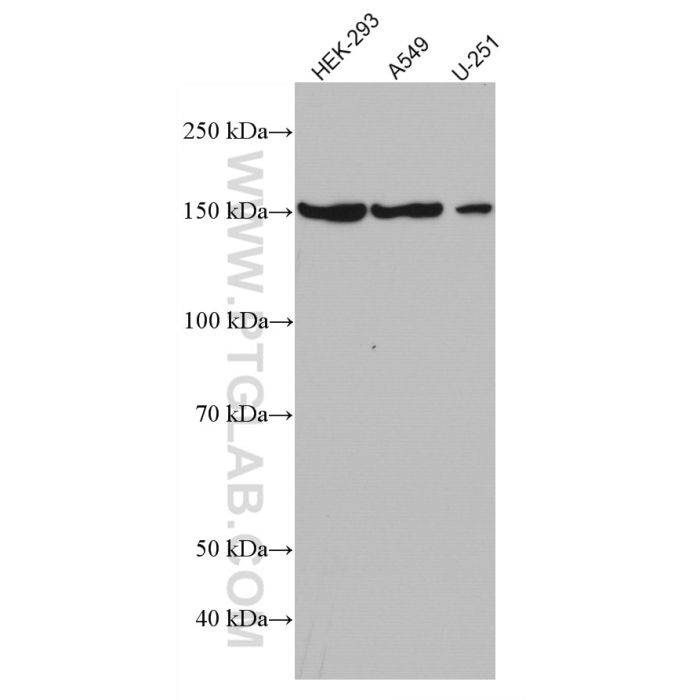
| Tested Applications: Positive WB detected in | Gene ID (NCBI): 2735 |
| Application: Western Blot (WB) | RRID: AB_2882232 |
| Dilution: WB : 1:2000-1:20000 | Conjugate: Unconjugated |
| Tested Reactivity: Human, Mouse, Rat, Pig | Form: Liquid |
| Host / Isotype: Mouse / IgG1 | Background Information: GLI1, also known as Glioma-associated oncogene, is a 1106 amino acid protein, which belongs to the GLI C2H2-type zinc-finger protein family. GLI1 is detected in testis and Also expressed in the brain with highest expression in the cerebellum, optic nerve and olfactory tract. GLI1 is tethered in the cytoplasm by binding to SUFU (PubMed:10806483). GLI1 is activated and translocated to the nucleus promoted by interaction with STK36 (PubMed:10806483). Phosphorylation of GLI1 by ULK3 may promote nuclear localization (PubMed:19878745). GLI1 as a transcriptional activator may regulate the transcription of specific genes during normal development (PubMed:19706761). GLI1 plays a role in craniofacial development and digital development, as well as development of the central nervous system and gastrointestinal tract and Mediates SHH signaling (PubMed:19706761). GLI1 plays a role in cell proliferation and differentiation via its role in SHH signaling. |