XRCC5/Ku80 Polyclonal antibody proteintech 16389-1-AP
$449.00
In stock
SKU
16389-1-AP
KU80, XRCC5, double-strand-break rejoining, CTCBF, CTC85
| Host / Isotype: Rabbit / IgG | Class: Polyclonal |
| Reactivity: Human, Mouse And More (1) | Immunogen: CatNo: Ag9454 Product name: Recombinant human XRCC5 protein Source: e coli.-derived, PGEX-4T Tag: GST Domain: 384-732 aa of BC019027 Sequence: LDDLDMVAIVRYAYDKRANPQVGVAFPHIKHNYECLVYVQLPFMEDLRQYMFSSLKNSKKYAPTEAQLNAVDALIDSMSLAKKDEKTDTLEDLFPTTKIPNPRFQRLFQCLLHRALHPREPLPPIQQHIWNMLNPPAEVTTKSQIPLSKIKTLFPLIEAKKKDQVTAQEIFQDNHEDGPTAKKLKTEQGGAHFSVSSLAEGSVTSVGSVNPAENFRVLVKQKKASFEEASNQLINHIEQFLDTNETPYFMKSIDCIRAFREEAIKFSEEQRFNNFLKALQEKVEIKQLNHFWEIVVQDGITLITKEEASGSSVTAEEAKKFLAPKDKPSGDTAAVFEEGGDVDDLLDMI Predict reactive species |
| Applications: WB, IHC, IF/ICC, IP, CoIP, ChIP, RIP, ELISA | Observed Molecular Weight: 732 aa, 83 kDa |
| Formulation: PBS, Azide, Glycerol | GenBank Accession Number: BC019027 |
| Conjugate: Unconjugated | Gene Symbol: XRCC5 |
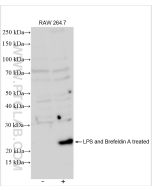
| Tested Applications: Positive WB detected in | Gene ID (NCBI): 7520 |
| Application: Western Blot (WB) | RRID: AB_2257509 |
| Dilution: WB : 1:500-1:2000 | Conjugate: Unconjugated |
| Tested Reactivity: Human, Mouse | Form: Liquid |
| Host / Isotype: Rabbit / IgG | Background Information: There are at least two pathways for eukaryotes to repair DNA double-strand breaks: homologous recombination and nonhomologous end joining(NHEJ). The core NHEJ machinery includes XRCC4, DNA ligase IV and the DNA-dependent protein kinase complex, which consists of the DNA end-binding XRCC5/XRCC6 heterodimer and the catalytic subunit PRKDC. The heterdimer of XRCC5/XRCC6 enhanced teh affinity of the catalytic subunit PRKDC to DNA by 100-fold. Once the XRCC5/6 dimer association with NAA15, it can bind to the osteocalcin promoter and activate osteocalcin expression. The XRCC5/6 dimer acts as a negative regulator of transcription when together with APEX1. Some publised papers indicated that the MW of XRCC5 is 86kDa, while more papers suggested that XRCC5 is a 80kDa protein, as it was firstly introducted in publication. Thus, Ku80 and Ku86 are the same protein. |