IL-6 Polyclonal antibody proteintech 21865-1-AP
$449.00
In stock
SKU
21865-1-AP
IL6, B-cell stimulatory factor 2, IFN-beta-2, IL 6, Interferon beta-2
| Host / Isotype: Rabbit / IgG | Class: Polyclonal |
| Reactivity: Human And More (5) | Immunogen: CatNo: Ag10565 Product name: Recombinant human IL-6 protein Source: e coli.-derived, PGEX-4T Tag: GST Domain: 1-212 aa of BC015511 Sequence: MNSFSTSAFGPVAFSLGLLLVLPAAFPAPVPPGEDSKDVAAPHRQPLTSSERIDKQIRYILDGISALRKETCNKSNMCESSKEALAENNLNLPKMAEKDGCFQSGFNEETCLVKIITGLLEFEVYLEYLQNRFESSEEQARAVQMSTKVLIQFLQKKAKNLDAITTPDPTTNASLLTKLQAQNQWLQDMTTHLILRSFKEFLQSSLRALRQM Predict reactive species |
| Applications: WB, IHC, IF/ICC, IP, Neutralization, ELISA | Observed Molecular Weight: 212 aa, 24 kDa |
| Formulation: PBS, Azide, Glycerol | GenBank Accession Number: BC015511 |
| Conjugate: Unconjugated | Gene Symbol: IL6 |
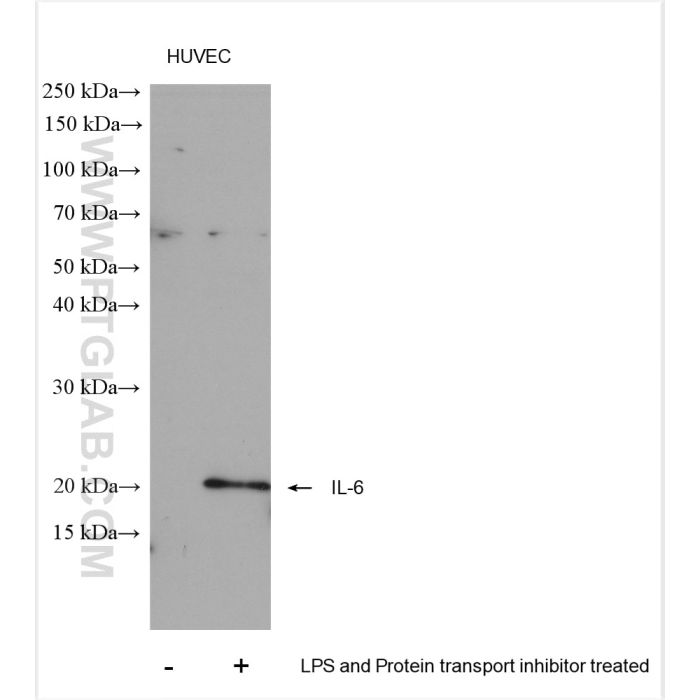
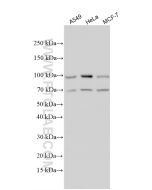
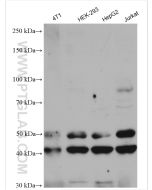
| Tested Applications: Positive WB detected in | Gene ID (NCBI): 3569 |
| Application: Western Blot (WB) | RRID: ENSG00000136244 |
| Dilution: WB : 1:500-1:2000 | Conjugate: AB_11142677 |
| Tested Reactivity: Human | Form: Unconjugated |
| Host / Isotype: Rabbit / IgG | Background Information: Interleukin-6 (IL-6) is an interleukin that acts as both a pro-inflammatory and anti-inflammatory cytokine. IL-6 protein is secreted by a variety of cell types including T cells and macrophages as phosphorylated and variably glycosylated molecule. IL-6 plays an essential role in the final differentiation of B-cells into Ig-secreting cells involved in lymphocyte and monocyte differentiation. It induces myeloma and plasmacytoma growth and induces nerve cells differentiation acts on B-cells, T-cells, hepatocytes, hematopoietic progenitor cells and cells of the CNS. IL-6 is also considered a myokine, a cytokine produced from muscle, and is elevated in response to muscle contraction. IL-6 has been shown to interact with interleukin-6 receptor and glycoprotein 130. Additionally, IL-6 is involved in hematopoiesis, bone metabolism, and cancer progression, and has been defined an essential role in directing transition from innate to acquired immunity. |