TGFBI/BIGH3 Polyclonal antibody proteintech 10188-1-AP
$449.00
In stock
SKU
10188-1-AP
TGFBI, TGFBI / BIGH3, Beta ig h3, Beta ig-h3, BIGH3
| Host / Isotype: Rabbit / IgG | Class: Polyclonal |
| Reactivity: Human, Mouse And More (1) | Immunogen: CatNo: Ag0241 Product name: Recombinant human BIGH3 protein Source: e coli.-derived, PGEX-4T Tag: GST Domain: 199-406 aa of BC000097 Sequence: NIQIHHYPNGIVTVNCARLLKADHHATNGVVHLIDKVISTITNNIQQIIEIEDTFETLRAAVAASGLNTMLEGNGQYTLLAPTNEAFEKIPSETLNRILGDPEALRDLLNNHILKSAMCAEAIVAGLSVETLEGTTLEVGCSGDMLTINGKAIISNKDILATNGVIHYIDELLIPDSAKTLFELAAESDVSTAIDLFRQAGLGNHLSG Predict reactive species |
| Applications: WB, IHC, IF/ICC, FC (Intra), IP, Neutralization, ELISA, Cell treatment | Observed Molecular Weight: 683 aa, 75 kDa |
| Formulation: PBS, Azide, Glycerol | GenBank Accession Number: BC000097 |
| Conjugate: Unconjugated | Gene Symbol: TGFBI |
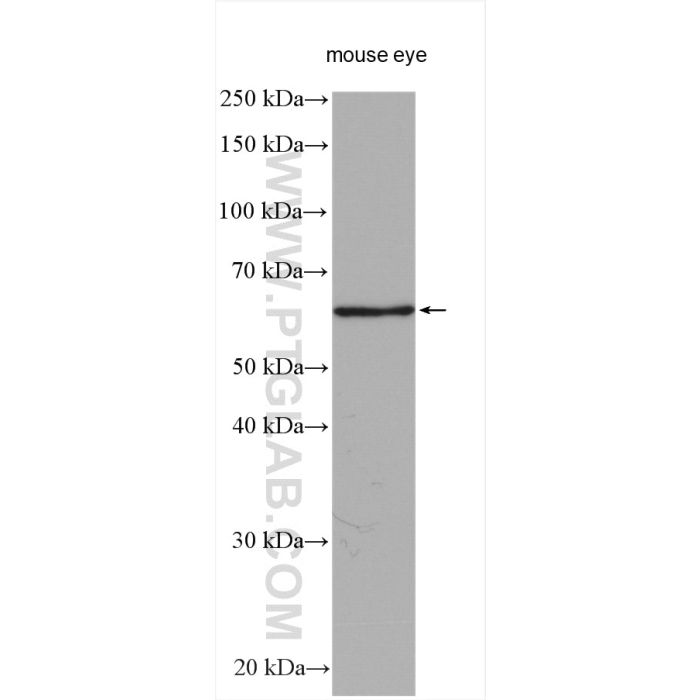
| Tested Applications: Positive WB detected in | Gene ID (NCBI): 7045 |
| Application: Western Blot (WB) | RRID: ENSG00000120708 |
| Dilution: WB : 1:1000-1:4000 | Conjugate: AB_2202311 |
| Tested Reactivity: Human, Mouse | Form: Unconjugated |
| Host / Isotype: Rabbit / IgG | Background Information: TGFBI, also named as BIGH3, Kerato-epithelin and RGD-CAP, binds to type I, II, and IV collagens. TGFBI is an adhesion protein which may play an important role in cell-collagen interactions. In cartilage, it may be involved in endochondral bone formation. TGFBI is an extracellular matrix adaptor protein, it has been reported to be differentially expressed in transformed tissues. TGFBI is a predictive factor of the response to chemotherapy, and suggest the use of TGFBI-derived peptides as possible therapeutic adjuvants for the enhancement of responses to chemotherapy.(PMID:20509890) Defects in TGFBI are the cause of epithelial basement membrane corneal dystrophy (EBMD). Defects in TGFBI are the cause of corneal dystrophy Groenouw type 1 (CDGG1). Defects in TGFBI are the cause of corneal dystrophy lattice type 1 (CDL1). Defects in TGFBI are a cause of corneal dystrophy Thiel-Behnke type (CDTB). Defects in TGFBI are the cause of Reis-Buecklers corneal dystrophy (CDRB). Defects in TGFBI are the cause of lattice corneal dystrophy type 3A (CDL3A). Defects in TGFBI are the cause of Avellino corneal dystrophy (ACD). |