TNFSF11/RANKL Polyclonal antibody proteintech 23408-1-AP
$449.00
In stock
SKU
23408-1-AP
TNFSF11, Tumor necrosis factor ligand superfamily member 11, TNF-related activation-induced cytokine, Receptor activator of nuclear factor kappa-B ligand, CD254
| Host / Isotype: Rabbit / IgG | Class: Polyclonal |
| Reactivity: Human And More (2) | Immunogen: CatNo: Ag19975 Product name: Recombinant human RANKL protein Source: e coli.-derived, PET28a Tag: 6*His Domain: 76-317 aa of BC074890 Sequence: PNRISEDGTHCIYRILRLHENADFQDTTLESQDTKLIPDSCRRIKQAFQGAVQKELQHIVGSQHIRAEKAMVDGSWLDLAKRSKLEAQPFAHLTINATDIPSGSHKVSLSSWYHDRGWAKISNMTFSNGKLIVNQDGFYYLYANICFRHHETSGDLATEYLQLMVYVTKTSIKIPSSHTLMKGGSTKYWSGNSEFHFYSINVGGFFKLRSGEEISIEVSNPSLLDPDQDATYFGAFKVRDID Predict reactive species |
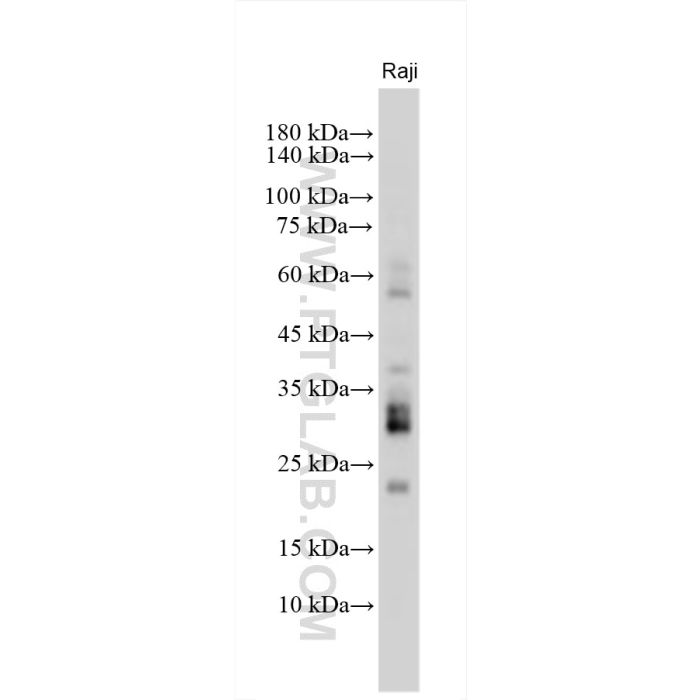
| Applications: WB, IHC, IF, ELISA | Observed Molecular Weight: 317 aa, 35 kDa |
| Formulation: PBS, Azide, Glycerol | GenBank Accession Number: BC074890 |
| Conjugate: Unconjugated | Gene Symbol: RANKL |
| Tested Applications: Positive WB detected in | Gene ID (NCBI): 8600 |
| Application: Western Blot (WB) | RRID: AB_2879273 |
| Dilution: WB : 1:500-1:1000 | Conjugate: Unconjugated |
| Tested Reactivity: Human | Form: Liquid |
| Host / Isotype: Rabbit / IgG | Background Information: TNFSF11 also known as RANKL, is a member of the tumor necrosis factor (TNF) cytokine family which is a ligand for osteoprotegerin and functions as a key factor for osteoclast differentiation and activation. RANKL is a polypeptide of 217 amino acids that exerts its biological activity both in a transmembrane form of about 40-45 kDa and in soluble one of 31 kDa (PMID: 15308315). The membrane-bound RANKL (mRANKL) is cleaved into a sRANKL by the metalloprotease-disintegrin TNF-alpha convertase (TACE) or a related metalloprotease (MP). RANKL induces osteoclast formation through its receptor, RANK, which transduces signals by recruiting adaptor molecules, such as the TNF receptor-associated factor (TRAF) family of proteins. RANKL was shown to be a dentritic cell survival factor and is involved in the regulation of T cell-dependent immune response. T cell activation was reported to induce expression of this gene and lead to an increase of osteoclastogenesis and bone loss. RANKL was shown to activate antiapoptotic kinase AKT/PKB through a signaling complex involving SRC kinase and tumor necrosis factor receptor-associated factor (TRAF) 6, which indicated this protein may have a role in the regulation of cell apoptosis. |