TNFSF11/RANKL Recombinant monoclonal antibody proteintech 84431-5-RR
$449.00
In stock
SKU
84431-5-RR
241791B7, CD254, ODF, OPGL, Osteoclast differentiation factor
| Host / Isotype: Rabbit / IgG | Class: Antibody |
| Reactivity: mouse | Immunogen: tumor necrosis factor (ligand) superfamily, member 11 |
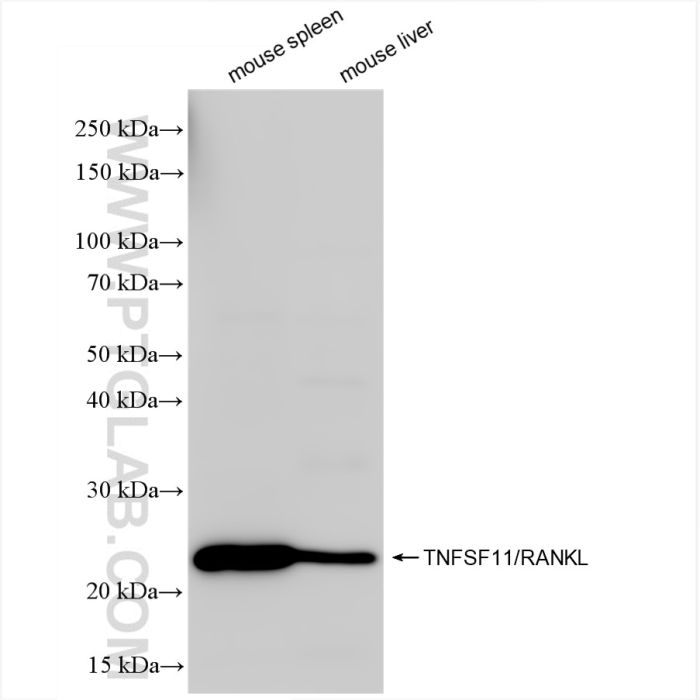
| Applications: WB, IHC, ELISA | Observed Molecular Weight: 22 kDa |
| Formulation: PBS, Azide, Glycerol | GenBank Accession Number: Tnfsf11 |
| Conjugate: Unconjugated | Gene Symbol: 21943 |
| Tested Applications: Positive WB detected in | Gene ID (NCBI): AB_3671958 |
| Application: Western Blot (WB) | RRID: Unconjugated |
| Dilution: WB : 1:1000-1:4000 | Conjugate: Liquid |
| Tested Reactivity: Mouse | Form: Protein A purfication |
| Host / Isotype: Recombinant | Background Information: TNFSF11, known as Tumor Necrosis Factor Superfamily Member 11, also known as RANKL (Receptor Activator of Nuclear Factor-κB Ligand), TRANCE, etc., is a member of the Tumor Necrosis Factor (TNF) superfamily.RANKL is a type II homotrimeric transmembrane protein located primarily at the plasma membrane. RANKL is a type II homotrimeric transmembrane protein located mainly at the plasma membrane, and in addition to the membrane-bound form (mRNAKL), it can also be cleaved by proteolytic cleavage of the cell membrane to produce the soluble form (sRANKL). The membrane-bound form of RANKL is the main form involved in triggering the RANKL/RANK signaling pathway and mediating osteoclastogenesis. Current studies have shown that TNFSF11 acts primarily in the immune and skeletal systems and has been implicated in the pathogenesis of degenerative bone diseases, carcinogenesis, and asthma. |