REDD1 Monoclonal antibody proteintech 67059-1-Ig
$449.00
In stock
SKU
67059-1-Ig
DDIT4, 3A2C10, DNA damage-inducible transcript 4 protein, HIF-1 responsive protein RTP801, REDD-1
| Host / Isotype: Mouse / IgG1 | Class: Monoclonal |
| Reactivity: human, mouse | Immunogen: CatNo: Ag0965 Product name: Recombinant human REDD1 protein Source: e coli.-derived, PGEX-4T Tag: GST Domain: 1-232 aa of BC007714 Sequence: MPSLWDRFSSSSTSSSPSSLPRTPTPDRPPRSAWGSATREEGFDRSTSLESSDCESLDSSNSGFGPEEDTAYLDGVSLPDFELLSDPEDEHLCANLMQLLQESLAQARLGSRRPARLLMPSQLVSQVGKELLRLAYSEPCGLRGALLDVCVEQGKSCHSVGQLALDPSLVPTFQLTLVLRLDSRLWPKIQGLFSSANSPFLPGFSQSLTLSTGFRVIKKKLYSSEQLLIEEC Predict reactive species |
| Applications: WB, ELISA | Observed Molecular Weight: 25 kDa |
| Formulation: PBS, Azide, Glycerol | GenBank Accession Number: BC007714 |
| Conjugate: Unconjugated | Gene Symbol: REDD1/DDIT4 |
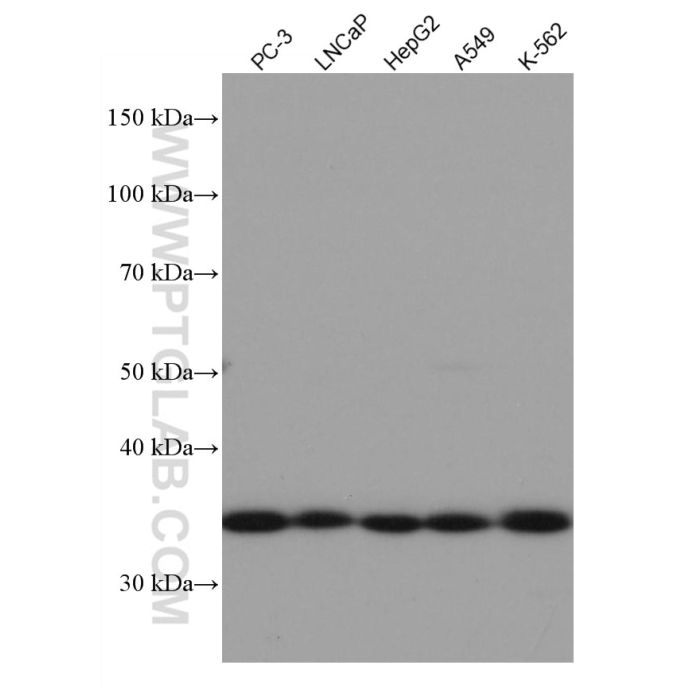
| Tested Applications: Positive WB detected in | Gene ID (NCBI): 54541 |
| Application: Western Blot (WB) | RRID: AB_2882369 |
| Dilution: WB : 1:1000-1:8000 | Conjugate: Unconjugated |
| Tested Reactivity: Human, Mouse | Form: Liquid |
| Host / Isotype: Mouse / IgG1 | Background Information: REDD1, also named as RTP801 and DDIT4, belongs to the DDIT4 family. REDD1 promotes neuronal cell death. It is a novel transcriptional target of p53 implicated ROS in the p53-dependent DNA damage response. REDD1 controlled cell growth under energy stress, as an essential regulator of TOR activity through the TSC1/2 complex. REDD-1 expression has also been linked to apoptosis, Aβ toxicity and the pathogenesis of ischemic diseases. As an HIF-1-responsive gene, REDD-1 exhibits strong hypoxia-dependent upregulation in ischemic cells of neuronal origin[PMID: 19996311]. In response to stress due to DNA damage and glucocorticoid treatment, REDD-1 is upregulated at the transcriptional level[PMID: 21733849]. REDD-1 negatively regulates the mammalian target of Rapamycin, a serine/threonine kinase often referred to as mTOR[PMID: 22951983]. It is crucial in the coupling of extra- and intracellular cues to mTOR regulation. The absence of REDD-1 is associated with the development of retinopathy, a major cause of blindness[PMID: 22304497]. REDD1 is a new host defense factor, and chemical activation of REDD1 expression represents a potent antiviral intervention strategy[PMID: 21909097]. The calculated molecular weight of REDD1 is 25 kDa. Because of multiple lysines in the proteins, REDD1 offen migrates around 35 kDa on Western blot[PMID: 19221489]. |