APOL1-Specific Monoclonal antibody proteintech 66124-1-Ig
$449.00
In stock
SKU
66124-1-Ig
APOL1, 1G12D11, Apo-L, ApoL-I, Apolipoprotein L I
| Host / Isotype: Mouse / IgG2a | Class: Monoclonal |
| Reactivity: human | Immunogen: CatNo: Ag2016 Product name: Recombinant human APOL1 protein Source: e coli.-derived, PGEX-4T Tag: GST Domain: 1-238 aa of BC017331 Sequence: MEGAALLRVSVLCIWMSALFLGVGVRAEEAGARVQQNVPSGTDTGDPQSKPLGDWAAGTMDPESSIFIEDAIKYFKEKVSTQNLLLLLTDNEAWNGFVAAAELPRNEADELRKALDNLARQMIMKDKNWHDKGQQYRNWFLKEFPRLKSELEDNIRRLRALADGVQKVHKGTTIANVVSGSLSISSGILTLVGMGLAPFTEGGSLVLLEPGMELGITAALTGITSSTMDYGKKWWTQA Predict reactive species |
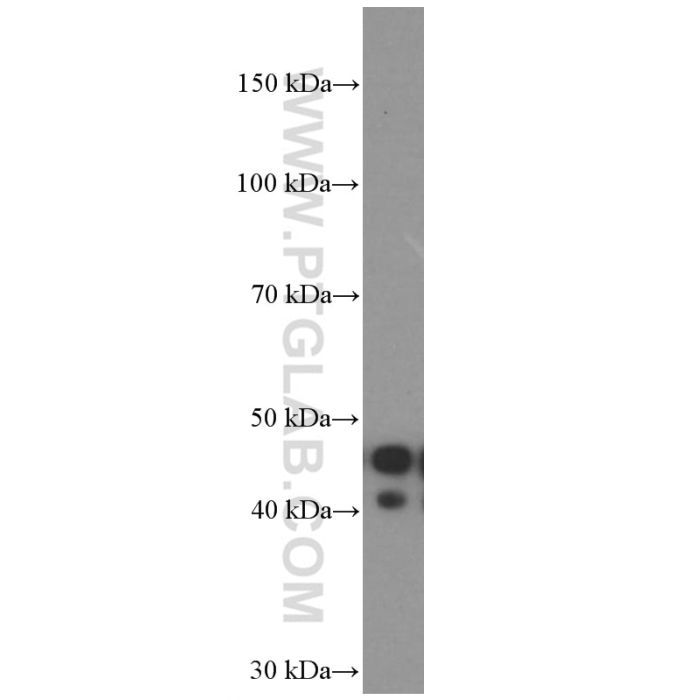
| Applications: WB, IHC, IF/ICC, IP, ELISA | Observed Molecular Weight: 44 kDa |
| Formulation: PBS, Azide, Glycerol | GenBank Accession Number: BC017331 |
| Conjugate: Unconjugated | Gene Symbol: APOL1 |
| Tested Applications: Positive WB detected in | Gene ID (NCBI): 8542 |
| Application: Western Blot (WB) | RRID: AB_2881523 |
| Dilution: WB : 1:20000-1:100000 | Conjugate: Unconjugated |
| Tested Reactivity: Human | Form: Liquid |
| Host / Isotype: Mouse / IgG2a | Background Information: Human apolipo-protein L1 (APOL1) is a minor component of plasma high density lipoprotein (HDL) particles, acting as an interacting protein of apolipoprotein A1 (ApoA1). The human ApoL protein family was thought to be predominantly involved in lipid transport and metabolism. APOL1 is also involved in host innate immunity against Trypanosoma parasites. Once activated, APOL1 can lyse the parasite and protect human from infection. Genetic variants in APOL1 gene, which are found in African ancestry with high frequency, associate with chronic kidney disease, like focal segmental glomerulosclerosis (FSGS), HIV-associated nephropathy (HIVAN), and hypertensive nephropathy. APOL1 share structural and functional similarities with proteins of the Bcl-2 family and may has roles in apoptosis and autophagy. It is notable that APOL1 exists only in human and a few other primate species, and mouse does not express an APOL1 orthologue. This antibody recognizes the endogenous ApoL1 of 39-45 kDa in blood lysate. This antibody is specific to APOL1. |