SIRT4 Monoclonal antibody proteintech 66543-1-Ig
$449.00
In stock
SKU
66543-1-Ig
EC:2.3.1.-, EC:2.3.1.286, EC:2.4.2.-, NAD-dependent ADP-ribosyltransferase sirtuin-4, NAD-dependent protein biotinylase sirtuin-4
| Host / Isotype: Mouse / IgG1 | Class: Monoclonal |
| Reactivity: human | Immunogen: CatNo: Ag17347 Product name: Recombinant human SIRT4 protein Source: e coli.-derived, PET28a Tag: 6*His Domain: 1-314 aa of BC109319 Sequence: MKMSFALTFRSAKGRWIANPSQPCSKASIGLFVPASPPLDPEKVKELQRFITLSKRLLVMTGAGISTESGIPDYRSEKVGLYARTDRRPIQHGDFVRSAPIRQRYWARNFVGWPQFSSHQPNPAHWALSTWEKLGKLYWLVTQNVDALHTKAGSRRLTELHGCMDRVLCLDCGEQTPRGVLQERFQVLNPTWSAEAHGLAPDGDVFLSEEQVRSFQVPTCVQCGGHLKPDVVFFGDTVNPDKVDFVHKRVKEADSLLVVGSSLQVYSGYRFILTAWEKKLPIAILNIGPTRSDDLACLKLNSRCGELLPLIDPC Predict reactive species |
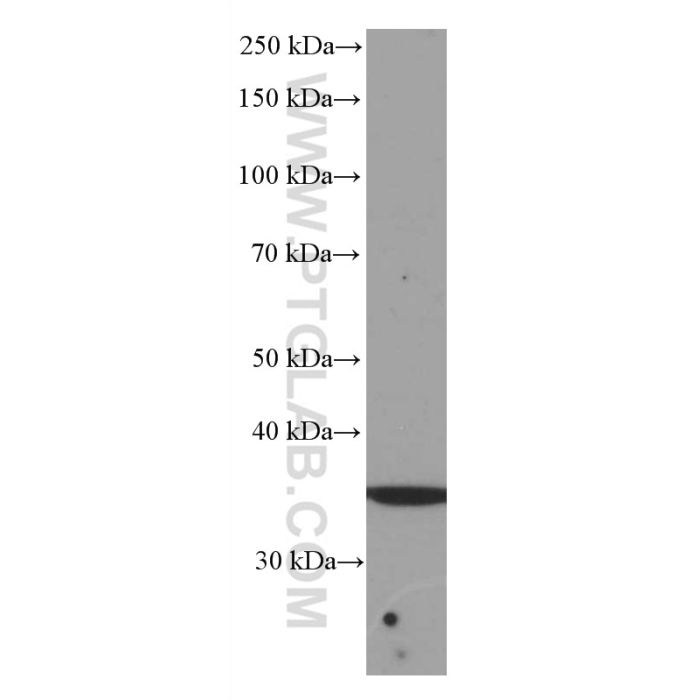
| Applications: WB, IHC, IF, ELISA | Observed Molecular Weight: 314 aa, 35 kDa |
| Formulation: PBS, Azide, Glycerol | GenBank Accession Number: BC109319 |
| Conjugate: Unconjugated | Gene Symbol: SIRT4 |
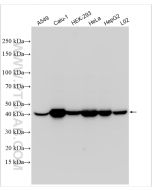
| Tested Applications: Positive WB detected in | Gene ID (NCBI): 23409 |
| Application: Western Blot (WB) | RRID: AB_2881905 |
| Dilution: WB : 1:20000-1:80000 | Conjugate: Unconjugated |
| Tested Reactivity: Human | Form: Liquid |
| Host / Isotype: Mouse / IgG1 | Background Information: SIRT4, also named as NAD-dependent protein lipoamidase sirtuin-4, mitochondria, is a 314 amino acid protein, which belongs to the sirtuin family. Class II subfamily. SIRT4 is detected in vascular smooth muscle and striated muscle. SIRT4 is detected in insulin-producing beta-cells in pancreas islets of Langerhans. SIRT4 Acts as NAD-dependent protein lipoamidase, ADP-ribosyl transferase and deacetylase. It catalyzes more efficiently removal of lipoyl- and biotinyl- than acetyl-lysine modifications and inhibits the pyruvate dehydrogenase complex (PDH) activity via the enzymatic hydrolysis of the lipoamide cofactor from the E2 component, DLAT, in a phosphorylation-independent manner. SIRT4 expression is down-regulated in a number of cancers, while overexpression reduces cell proliferation, transformation, and tumor development. |