cIAP1 Polyclonal antibody proteintech 10022-1-AP
$449.00
In stock
SKU
10022-1-AP
| Host / Isotype: Rabbit / IgG | Class: Polyclonal |
| Reactivity: Human, Mouse And More (2) | Immunogen: CatNo: Ag15203 Product name: Recombinant human cIAP1 protein Source: e coli.-derived, PGEX-4T Tag: GST Domain: 1-350 aa of BC016174 Sequence: MHKTASQRLFPGPSYQNIKSIMEDSTILSDWTNSNKQKMKYDFSCELYRMSTYSTFPAGVPVSERSLARAGFYYTGVNDKVKCFCCGLMLDNWKLGDSPIQKHKQLYPSCSFIQNLVSASLGSTSKNTSPMRNSFAHSLSPTLEHSSLFSGSYSSLSPNPLNSRAVEDISSSRTNPYSYAMSTEEARFLTYHMWPLTFLSPSELARAGFYYIGPGDRVACFACGGKLSNWEPKDDAMSEHRRHFPNCPFLENSLETLRFSISNLSMQTHAARMRTFMYWPSSVPVQPEQLASAGFYYVGRNDDVKCFCCDGGLRCWESGDDPWVEHAKWFPRCEFLIRMKGQEFVDEIQG Predict reactive species |
| Applications: WB, IHC, IF/ICC, FC (Intra), CoIP, ELISA | Observed Molecular Weight: 618 aa, 70 kDa |
| Formulation: PBS, Azide, Glycerol | GenBank Accession Number: BC016174 |
| Conjugate: Unconjugated | Gene Symbol: cIAP1 |
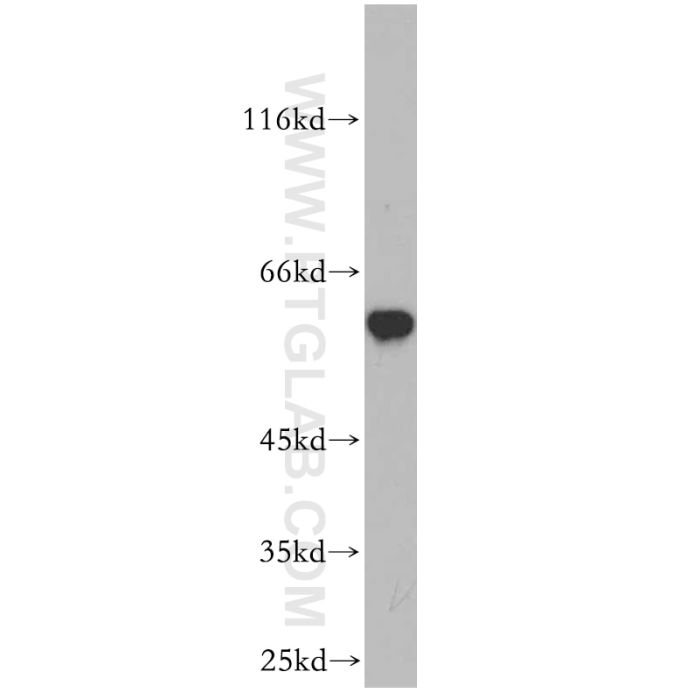
| Tested Applications: Positive WB detected in | Gene ID (NCBI): 329 |
| Application: Western Blot (WB) | RRID: AB_2063790 |
| Dilution: WB : 1:500-1:2000 | Conjugate: Unconjugated |
| Tested Reactivity: Human, Mouse | Form: Liquid |
| Host / Isotype: Rabbit / IgG | Background Information: BIRC2 (also known as cIAP1) is a member of the inhibitor of apoptosis protein (IAP) family. The inhibitor of apoptosis (IAP) proteins are a family of anti-apoptotic regulators found in viruses and metazoans. BIRC2 is a nuclear shuttling protein, whose subcellular localization is mediated by the CRM1-dependent nuclear export pathway (PMID: 15265700). The protein is regulated transcriptionally and can be inhibited by mitochondrial proteins released in the cytoplasm upon apoptotic stimuli (PMID: 15187025). BIRC2 is also believed to be a critical regulator of vascular integrity and endothelial cell survival, thereby providing an additional target pathway for the control of angiogenesis and blood vessel homeostasis during embryogenesis, regeneration and tumorigenesis (PMID: 17934460). This BIRC2 antibody (10022-1-AP) can bind both full length (70kd) and cleaved form (60kd) of the protein. |