ACSS1 Polyclonal antibody proteintech 17138-1-AP
$449.00
In stock
SKU
17138-1-AP
| Host / Isotype: Rabbit / IgG | Class: Polyclonal |
| Reactivity: Human, Mouse, Rat And More (1) | Immunogen: CatNo: Ag10896 Product name: Recombinant human ACSS1 protein Source: e coli.-derived, PGEX-4T Tag: GST Domain: 340-689 aa of BC039261 Sequence: ITGHSYVVYGPLCNGATSVLFESTPVYPNAGRYWETVERLKINQFYGAPTAVRLLLKYGDAWVKKYDRSSLRTLGSVGEPINCEAWEWLHRVVGDSRCTLVDTWWQTETGGICIAPRPSEEGAEILPAMAMRPFFGIVPVLMDEKGSVMEGSNVSGALCISQAWPGMARTIYGDHQRFVDAYFKAYPGYYFTGDGAYRTEGGYYQITGRMDDVINISGHRLGTAEIEDAIADHPAVPESAVIGYPHDIKGEAAFAFIVVKDSAGDSDVVVQELKSMVATKIAKYAVPDEILVVKRLPKTRSGKVMRRLLRKIITSEAQELGDTTTLEDPSIIAEILSVYQKCKDKQAAAK Predict reactive species |
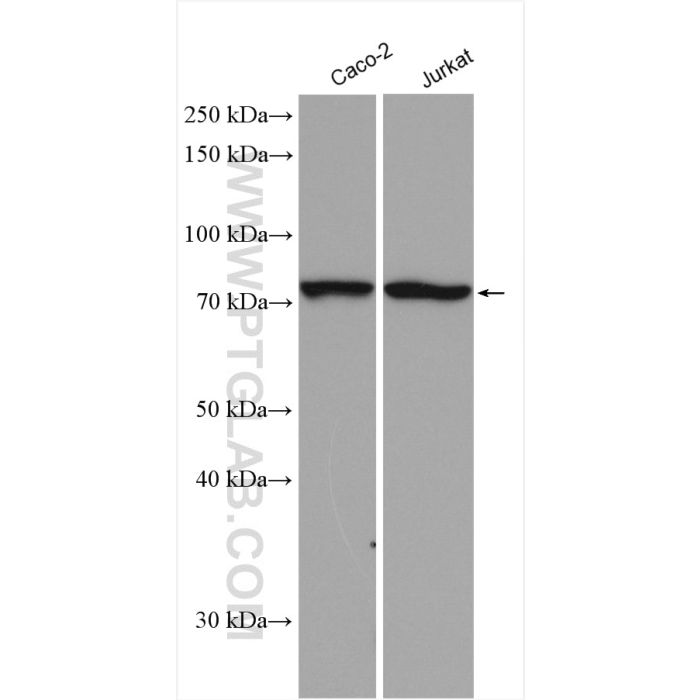
| Applications: WB, IHC, IF, IP, ELISA | Observed Molecular Weight: 689 aa, 75 kDa |
| Formulation: PBS, Azide, Glycerol | GenBank Accession Number: BC039261 |
| Conjugate: Unconjugated | Gene Symbol: ACSS1 |
| Tested Applications: Positive WB detected in | Gene ID (NCBI): 84532 |
| Application: Western Blot (WB) | RRID: AB_2289182 |
| Dilution: WB : 1:500-1:3000 | Conjugate: Unconjugated |
| Tested Reactivity: Human, Mouse, Rat | Form: Liquid |
| Host / Isotype: Rabbit / IgG | Background Information: The ACSS (acetyl-CoA synthetase) enzyme is the sole known mammalian enzyme that can catalyze the conversion of free acetate into acetyl coenzyme A (acetyl-CoA). The three known isoforms of human ACSS are termed ACSS1, ACSS2, and ACSS3. The main substrate of ACSS1 and ACSS2 is acetate, while the preferential substrate of ACSS3 is propionate. Two acetate related enzymes, ACSS1(GeneID: 84532) and ACSS2 (GeneID:55902) difer in their tissue distribution and subcellular localization. On the one hand, as a mitochondrial matrix enzyme, ACSS1 is expressed mainly in cardiac and skeletal muscle as well as brown adipose tissue. On the other hand, as a nuclear and cytoplasmic enzyme, ACSS2 is strongly expressed in the liver, kidney and heart and moderately expressed in the brain and testis.ACSS2 participates in lipid synthesis and facilitates protein acetylation by generating acetyl-CoA, while ACSS1 is involved in acetate oxidation. The functional diferences in these enzymes involve energy production through the tricarboxylic acid (TCA) cycle. Due to its more thorough utilization of intracellular acetate, ACSS2 is expressed in almost all cell types under diferent physiological conditions. |