MOG Polyclonal antibody proteintech 12690-1-AP
$449.00
In stock
SKU
12690-1-AP
| Host / Isotype: Rabbit / IgG | Class: Polyclonal |
| Reactivity: human, mouse, rat | Immunogen: CatNo: Ag3273 Product name: Recombinant human MOG protein Source: e coli.-derived, PGEX-4T Tag: GST Domain: 1-295 aa of BC035938 Sequence: MASLSRPSLPSCLCSFLLLLLLQVSSSYAGQFRVIGPRHPIRALVGDEVELPCRISPGKNATGMEVGWYRPPFSRVVHLYRNGKDQDGDQAPEYRGRTELLKDAIGEGKVTLRIRNVRFSDEGGFTCFFRDHSYQEEAAMELKVEDPFYWVSPGVLVLLAVLPVLLLQITVGLVFLCLQYRLRGKLRAEIENLHRTFDPHFLRVPCWKITLFVIVPVLGPLVALIICYNWLHRRLAGQFLEELRKFSSLCYKQRIKSQERETEATRGRGGLLRDHIPRGKEELESLGGGKTPPGR Predict reactive species |
| Applications: WB, IHC, IF-P, ELISA | Observed Molecular Weight: 295 aa, 34 kDa |
| Formulation: PBS, Azide, Glycerol | GenBank Accession Number: BC035938 |
| Conjugate: Unconjugated | Gene Symbol: MOG |
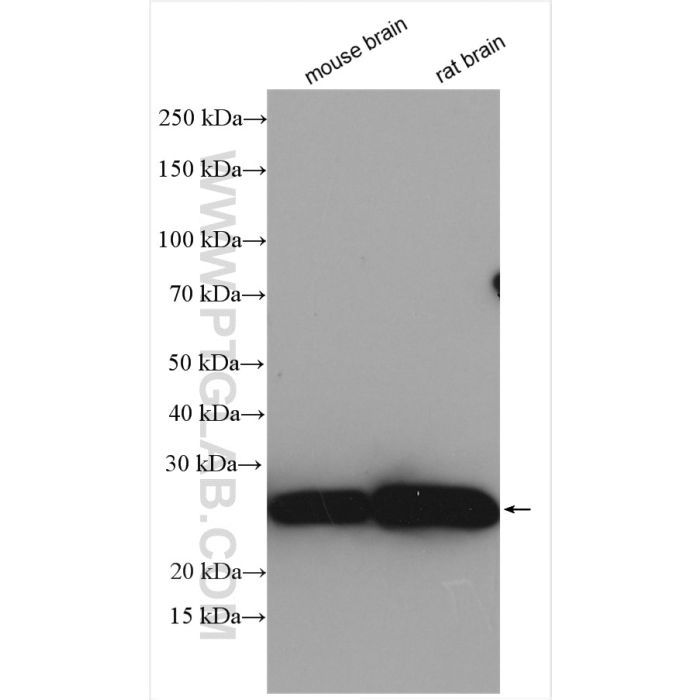
| Tested Applications: Positive WB detected in | Gene ID (NCBI): 4340 |
| Application: Western Blot (WB) | RRID: AB_2145527 |
| Dilution: WB : 1:500-1:3000 | Conjugate: Unconjugated |
| Tested Reactivity: Human, Mouse, Rat | Form: Liquid |
| Host / Isotype: Rabbit / IgG | Background Information: Myelin/oligodendrocyte glycoprotein (MOG), a 23~28 kDa glycoprotein, a myelin antigen at the outer surface of the central nervous system (CNS) myelin sheath, which may trigger T-cell as well as B-cell responses. It therefore constitutes a pivotal target for autoimmune responses, which result in inflammation and also demyelination in the CNS. Its presence on the outer- most lamellae of mature CNS myelin and its late appearance during myelinogenesis suggest that it contributes to myelin maturation or maintenance. 10 isoforms of MOG produced by alternative splicing have been described, and heterodimers may be formed between the different isoforms. Defects in MOG are the cause of narcolepsy type 7 (NRCLP7), a neurological disabling sleep disorder characterized by excessive daytime sleepiness, sleep fragmentation, symptoms of abnormal rapid-eye-movement (REM) sleep, cataplexy, hypnagogic hallucinations, and sleep paralysis. Role of MOG in the pathogenesis of multiple sclerosis (MS) has been reported but remains to be clarified. |