Adiponectin Polyclonal antibody proteintech 21613-1-AP
$449.00
In stock
SKU
21613-1-AP
ADIPOQ, apM-1, ADIPQTL1, Adipocyte, C1q and collagen domain-containing protein, Adipocyte complement-related 30 kDa protein
| Host / Isotype: Rabbit / IgG | Class: Polyclonal |
| Reactivity: Human, Mouse, Rat And More (3) | Immunogen: CatNo: Ag16304 Product name: Recombinant human ADIPOQ protein Source: e coli.-derived, PGEX-4T Tag: GST Domain: 1-244 aa of BC096308 Sequence: MLLLGAVLLLLALPGHDQETTTQGPGVLLPLPKGACTGWMAGIPGHPGHNGAPGRDGRDGTPGEKGEKGDPGLIGPKGDIGETGVPGAEGPRGFPGIQGRKGEPGEGAYVYRSAFSVGLETYVTIPNMPIRFTKIFYNQQNHYDGSTGKFHCNIPGLYYFAYHITVYMKDVKVSLFKKDKAMLFTYDQYQENNVDQASGSVLLHLEVGDQVWLQVYGEGERNGLYADNDNDSTFTGFLLYHDTN Predict reactive species |
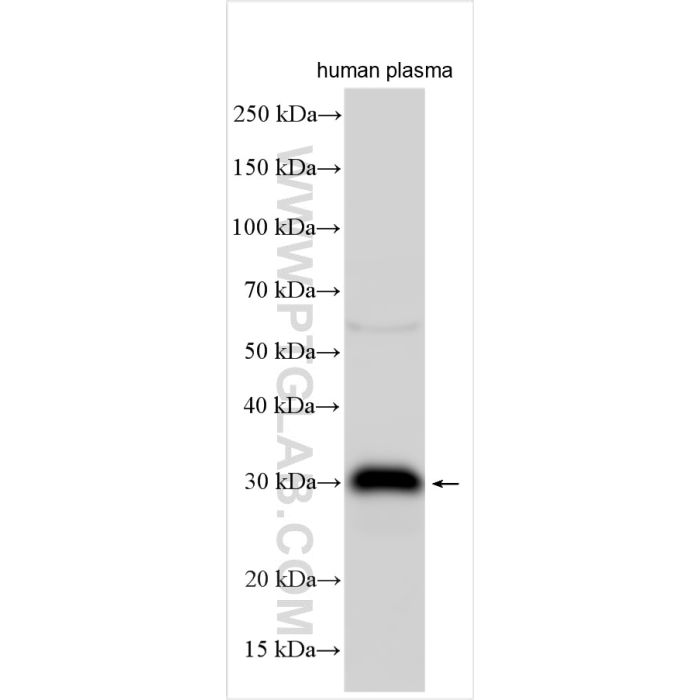
| Applications: WB, IHC, IF/ICC, ELISA | Observed Molecular Weight: 244 aa, 26 kDa |
| Formulation: PBS, Azide, Glycerol | GenBank Accession Number: BC096308 |
| Conjugate: Unconjugated | Gene Symbol: Adiponectin |
| Tested Applications: Positive WB detected in | Gene ID (NCBI): 9370 |
| Application: Western Blot (WB) | RRID: AB_2878891 |
| Dilution: WB : 1:500-1:2000 | Conjugate: Unconjugated |
| Tested Reactivity: Human, Mouse, Rat | Form: Liquid |
| Host / Isotype: Rabbit / IgG | Background Information: Adiponectin (AdipoQ), an adipocyte-derived hormone, is one of the most abundant adipokines in the blood circulation. Adiponectin modulates a number of metabolic processes, including improving INS sensitivity and anti-inflammatory activity. The role of AdipoQ in reproduction is not yet fully understood, but the expression of AdipoQ in reproductive tissues has been observed in various animals and humans, including chicken testis, bovine ovary, and human placenta. Adiponectin exerts its effects by activating a range of different signaling molecules via binding to two transmembrane AdipoQ receptors, AdipoR1 and AdipoR2. AdipoR1 is expressed primarily in the skeletal muscle, whereas AdipoR2 is predominantly expressed in the liver. AdipoQ May play a role in cell growth, angiogenesis and tissue remodeling by binding and sequestering various growth factors. |