SIRT1 Polyclonal antibody proteintech 13161-1-AP
$449.00
In stock
SKU
13161-1-AP
EC:2.3.1.-, EC:2.3.1.286, hSIR2, hSIRT1, NAD-dependent protein deacetylase sirtuin-1
| Host / Isotype: Rabbit / IgG | Class: Polyclonal |
| Reactivity: Human And More (7) | Immunogen: CatNo: Ag3808 Product name: Recombinant human SIRT1 protein Source: e coli.-derived, PGEX-4T Tag: GST Domain: 1-350 aa of BC012499 Sequence: MIGTDPRTILKDLLPETIPPPELDDMTLWQIVINILSEPPKRKKRKDINTIEDAVKLLQECKKIIVLTGAGVSVSCGIPDFRSRDGIYARLAVDFPDLPDPQAMFDIEYFRKDPRPFFKFAKEIYPGQFQPSLCHKFIALSDKEGKLLRNYTQNIDTLEQVAGIQRIIQCHGSFATASCLICKYKVDCEAVRGALFSQVVPRCPRCPADEPLAIMKPEIVFFGENLPEQFHRAMKYDKDEVDLLIVIGSSLKVRPVALIPSSIPHEVPQILINREPLPHLHFDVELLGDCDVIINELCHRLGGEYAKLCCNPVKLSEITEKPPRTQKELAYLSELPPTPLHVSEDSSSPE Predict reactive species |
| Applications: WB, IHC, IF/ICC, IP, CoIP, RIP, ELISA | Observed Molecular Weight: 747 aa, 82 kDa |
| Formulation: PBS, Azide, Glycerol | GenBank Accession Number: BC012499 |
| Conjugate: Unconjugated | Gene Symbol: SIRT1 |
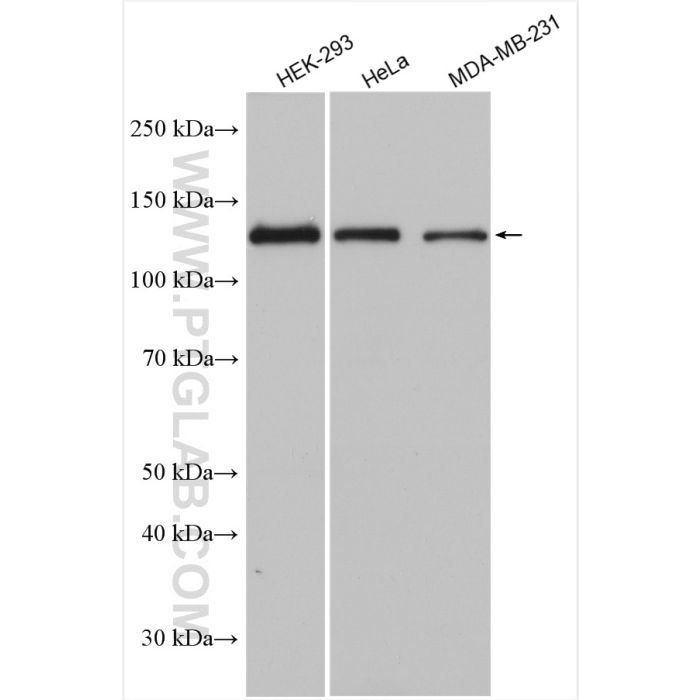
| Tested Applications: Positive WB detected in | Gene ID (NCBI): 23411 |
| Application: Western Blot (WB) | RRID: AB_10646436 |
| Dilution: WB : 1:1000-1:6000 | Conjugate: Unconjugated |
| Tested Reactivity: Human | Form: Liquid |
| Host / Isotype: Rabbit / IgG | Background Information: SIRT1, also named SIR2L1, contains a deacetylase sirtuin-type domain and belongs to the sirtuin family. The post-translation modified SIRT1 is a 110-130 kDa protein, which contains one deacetylase sirtuin-type domain. The 75-80 kDa SirT1 fragment was detected to lack the carboxy-terminus (PMID:21305533). SirT1 exists a 57-61 kDa isoform. SIRT1 may be found in nucleolus, nuclear euchromatin, heterochromatin, and inner membrane. It can shuttle between the nucleus and cytoplasm. SIRT1 regulates processes such as apoptosis and muscle differentiation by deacetylating key proteins. SIRT1 in particular initiates several signaling events relevant to cardioprotection, including activation of endothelial nitric oxide synthase, INS receptor signaling, and autophagy. In addition, SIRT1 activation elicits resistance to oxidative stress via the regulation of transcription factors and co-activators such as FOXO, Hif-2a, and NF-kB. SIRT1 regulates the p53-dependent DNA damage response pathway by binding to and deacetylating p53, specifically at Lysine 382. This antibody is a rabbit polyclonal antibody raised against residues near the N terminus of human SIRT1. |