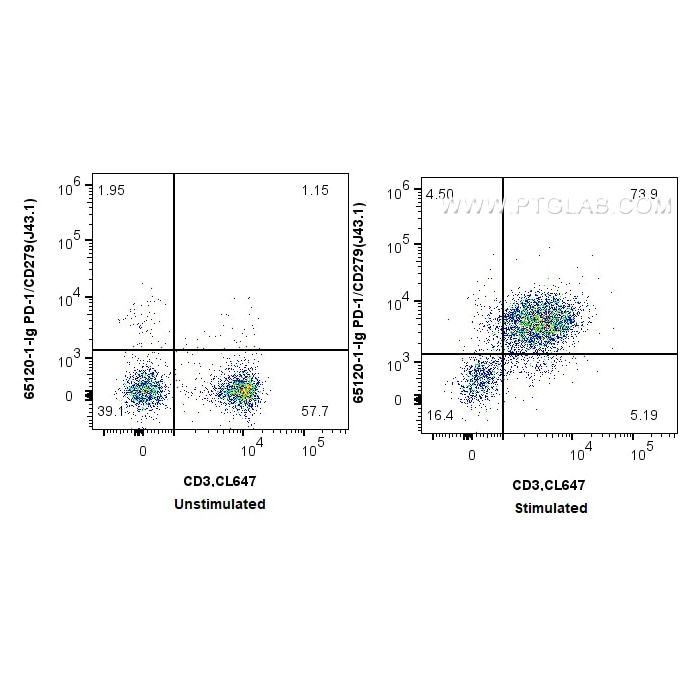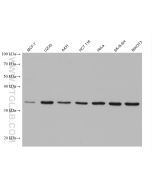
Anti-Mouse PD-1/CD279 (J43.1) Proteintech 65120-1-Ig
$299.00
In stock
SKU
65120-1-Ig
CD279, PD1, PD-1, J43.1, PD 1
| Formulation::PBS, Azide | Formulation::PBS, Azide1 |
| Applications:Flow Cytometry (FC) | Formulation::PBS, Azide2 |
| Reactivity:Armenian Hamster / IgG | Formulation::PBS, Azide3 |
| Type:B12 cells, mouse PD-1 cDNA-transfected BHK cells Predict reactive species | Formulation::PBS, Azide4 |
| RRID:AB_3670274 | Formulation::PBS, Azide5 |
| Storage Buffer:Q02242 | Formulation::PBS, Azide6 |
| Background Information:Programmed cell death 1 (PD-1, also known as CD279) is an immunoinhibitory receptor that belongs to the CD28/CTLA-4 subfamily of the Ig superfamily. It is a 288 amino acid (aa) type I transmembrane protein composed of one Ig superfamily domain, a stalk, a transmembrane domain, and an intracellular domain containing an immunoreceptor tyrosine-based inhibitory motif (ITIM) as well as an immunoreceptor tyrosine-based switch motif (ITSM) (PMID: 18173375). PD-1 is expressed during thymic development and is induced in a variety of hematopoietic cells in the periphery by antigen receptor signaling and cytokines (PMID: 20636820). Engagement of PD-1 by its ligands PD-L1 or PD-L2 transduces a signal that inhibits T-cell proliferation, cytokine production, and cytolytic function (PMID: 19426218). It is critical for the regulation of T cell function during immunity and tolerance. Blockade of PD-1 can overcome immune resistance and also has been shown to have antitumor activity (PMID: 22658127; 23169436). | Formulation::PBS, Azide7 |
| biogegep8 | Formulation::PBS, Azide8 |
| biogegep9 | Formulation::PBS, Azide9 |
| Formulation::PBS, Azide0 | Applications:Flow Cytometry (FC)0 |